· Synx Data Labs
Greenplum Alternative: What the License Change Means
Explore the implications of Greenplum's recent development shifts and why organizations are moving toward vendor-neutral alternatives like Apache Cloudberry.
For enterprises and developers operating at scale, evaluating a long-term reliable Greenplum alternative is becoming an increasingly important part of data infrastructure strategy.
In recent years, the database ecosystem has undergone noticeable shifts, particularly around how certain projects are developed, maintained, and governed. These changes are prompting organizations to reassess not only their technology choices, but also the long-term sustainability of the platforms they depend on.
This article takes a closer look at what these changes mean for open source users—and how organizations can adapt their data platform strategy in response.
Background: A Proven Foundation in Analytical Data Systems
To understand the impact of recent changes, it is useful to revisit the role Greenplum has played in the evolution of modern data warehousing.
Since its inception in 2003, Greenplum has evolved into a mature distributed data warehouse built on PostgreSQL and powered by a Massively Parallel Processing (MPP) architecture. It has been widely adopted for large-scale analytical workloads, particularly in environments requiring strong SQL capabilities and high-performance distributed query execution.
Following its open-source release in 2015, Greenplum became a widely trusted component in enterprise data stacks. Compared to more complex ecosystems such as Hadoop, it offered a more streamlined approach to analytics—combining SQL compatibility, performance, and relatively lower operational overhead.
Over time, it established itself as a reliable platform across industries such as finance, telecommunications, and manufacturing, where stability and analytical performance are critical.
What Changed: A Shift in Development and Availability
As with many infrastructure technologies, the surrounding ecosystem continues to evolve.
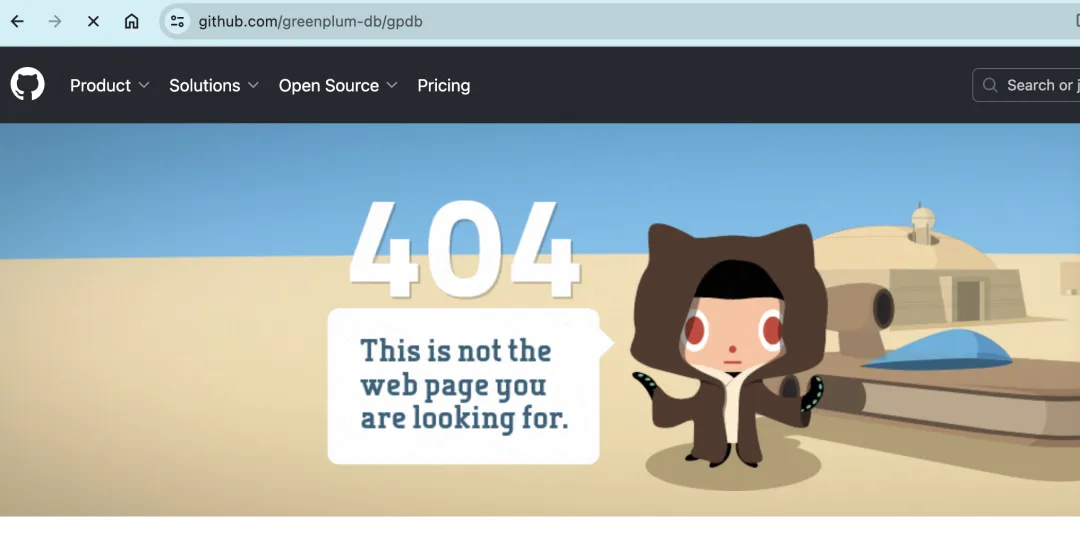
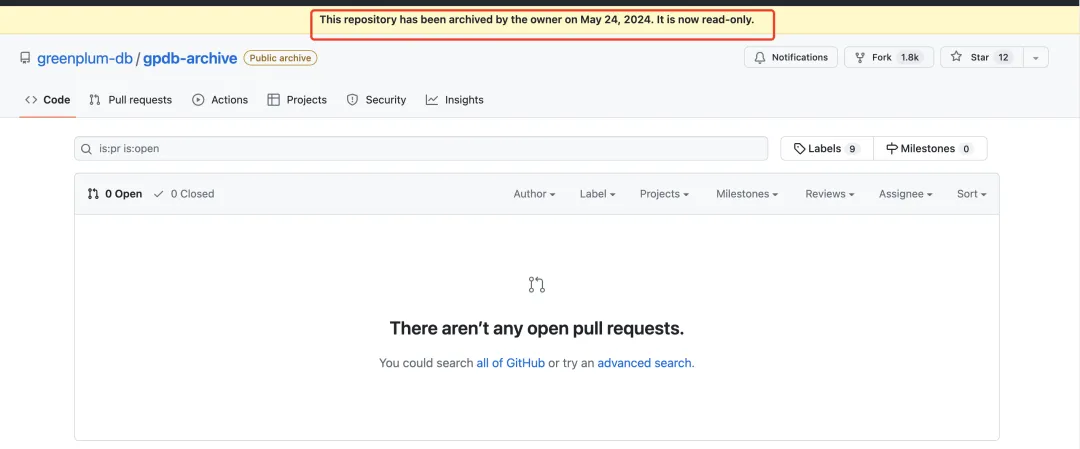 In 2024, the project’s public development footprint changed significantly, including the archival of its GitHub repository and a shift in how development is managed and distributed. While this does not invalidate existing deployments, it represents a meaningful change in the project’s development model.
More specifically, it signals:
- A shift toward vendor-controlled development
- Reduced visibility into community-driven contributions
- Changes in the availability of open-source updates and releases
For open source users, this introduces a new set of considerations around how the platform will evolve over time.
Implications: Beyond Technology
When the development model of a foundational system changes, the implications extend beyond technical features. For many organizations, the more significant impact lies in governance, cost structure, and long-term risk.
a. Legal and Compliance Considerations
For enterprise users, clarity around licensing and governance is essential.
In environments where open source components are deeply integrated into internal systems or redistributed as part of commercial offerings, any ambiguity in licensing or project ownership can introduce compliance risks. This is particularly relevant for organizations with formal Open Source Program Offices (OSPOs), where internal reviews and audits are standard practice.
A lack of neutral governance may also raise concerns around:
- Long-term license stability
- Redistribution boundaries
- Intellectual property exposure
These factors can increase the internal compliance burden and complicate risk management.
b. Cost Predictability
One of the key advantages of open source adoption has traditionally been cost control.
However, when the availability of fully open versions becomes limited, organizations may find themselves increasingly dependent on vendor-provided distributions or enterprise offerings. This can introduce a less predictable cost structure over time.
At the same time, continuing to operate an unmaintained or archived version introduces its own hidden costs, including:
- Internal maintenance of security patches
- Engineering effort for compatibility updates
- Increasing technical debt
From a planning perspective, both paths introduce uncertainty into long-term total cost of ownership (TCO).
c. Ecosystem and Innovation Trajectory
A healthy database ecosystem depends on active development, transparent roadmaps, and community participation.
When public collaboration channels become less active or visible, it becomes more difficult for users to anticipate future evolution—whether in terms of performance improvements, new features, or compatibility with upstream technologies.
For example, alignment with newer PostgreSQL versions is a key concern for many users. Without a clear upgrade path, organizations may face increasing divergence from the broader PostgreSQL ecosystem.
Over time, this can limit the platform’s ability to keep pace with emerging requirements such as real-time analytics, AI-driven workloads, and modern data architectures.
What Users Are Looking For: Redefining Selection Criteria
In response to these changes, organizations are refining how they evaluate a Greenplum alternative—moving beyond simple feature comparisons toward long-term sustainability.
For a deeper look at what a viable open-source successor looks like, see: Why Apache Cloudberry Is the Most Natural Open Source Alternative to Greenplum
The focus is shifting from feature comparison to long-term architectural and governance considerations:
-
Open governance
Preference for vendor-neutral development models, typically under established open source foundations, to ensure transparency and long-term stability. -
Compatibility and continuity
The ability to preserve existing SQL workloads, data models, and operational practices remains critical to minimizing migration risk. -
Predictable cost structure
A sustainable model that avoids unexpected licensing or operational costs over time.
These criteria reflect a broader shift: organizations are no longer evaluating databases purely as products, but as long-term infrastructure commitments.
An Emerging Path: Apache Cloudberry
Within this context, one emerging direction is Apache Cloudberry.
As a project that continues the Greenplum architectural lineage under an Apache governance model, it represents a different approach to sustainability—one that emphasizes open collaboration, transparent development, and long-term ecosystem alignment.
Rather than introducing a completely new paradigm, it focuses on continuity:
- Preserving compatibility with existing Greenplum and PostgreSQL environments
- Providing a path for ongoing modernization
- Operating within a vendor-neutral governance structure
For organizations seeking an open source Greenplum alternative, this model offers a balance between stability and evolution.
Conclusion
The changes surrounding Greenplum are not simply about licensing—they reflect a broader shift in how critical data infrastructure is developed and maintained.
For organizations evaluating their next steps, the key question is not just what to replace, but how to ensure long-term sustainability.
Choosing a Greenplum alternative today means making decisions about governance, cost predictability, and architectural direction for the years ahead.
In that context, prioritizing openness, continuity, and ecosystem health is not just a technical consideration—it is a strategic one.
Related Reading
If you’re evaluating long-term alternatives to Greenplum or planning a migration strategy, these resources may help:
- Why Apache Cloudberry Is the Most Natural Open Source Alternative to Greenplum — Learn why Apache Cloudberry is emerging as a vendor-neutral successor with architectural continuity.
- When Open Source Isn’t Enough — Explore where pure open source may fall short for enterprise-scale analytics and operational requirements.
- SynxDB vs Greenplum Benchmark — Compare performance characteristics and benchmark considerations for modern MPP analytics workloads.
- Greenplum to SynxDB Migration Guide — A practical guide to planning and executing a smooth migration with minimal disruption.